


Creating an event budget that actually works can be a challenge, but with a clear plan, you’ll be on track to hosting a successful event that meets your goals without a great amount of struggle.
1. Define your event goals and objectives
What’s the purpose of your event? Is it a social or corporate gathering? Are you raising funds, celebrating a birthday, or building brand awareness? Defining your event goals and objectives sets the foundation for your entire budget and helps you allocate funds effectively and measure success at the end of the day.

2. Identify your income sources
Identifying your income sources is crucial when creating a budget for an event. This involves determining where the money will come from to fund your event, such as sponsors, ticket sales, donations, or other revenue streams, so as to know how well to channel funds, and ensure your event remains financially covered.

3. List all event expenses
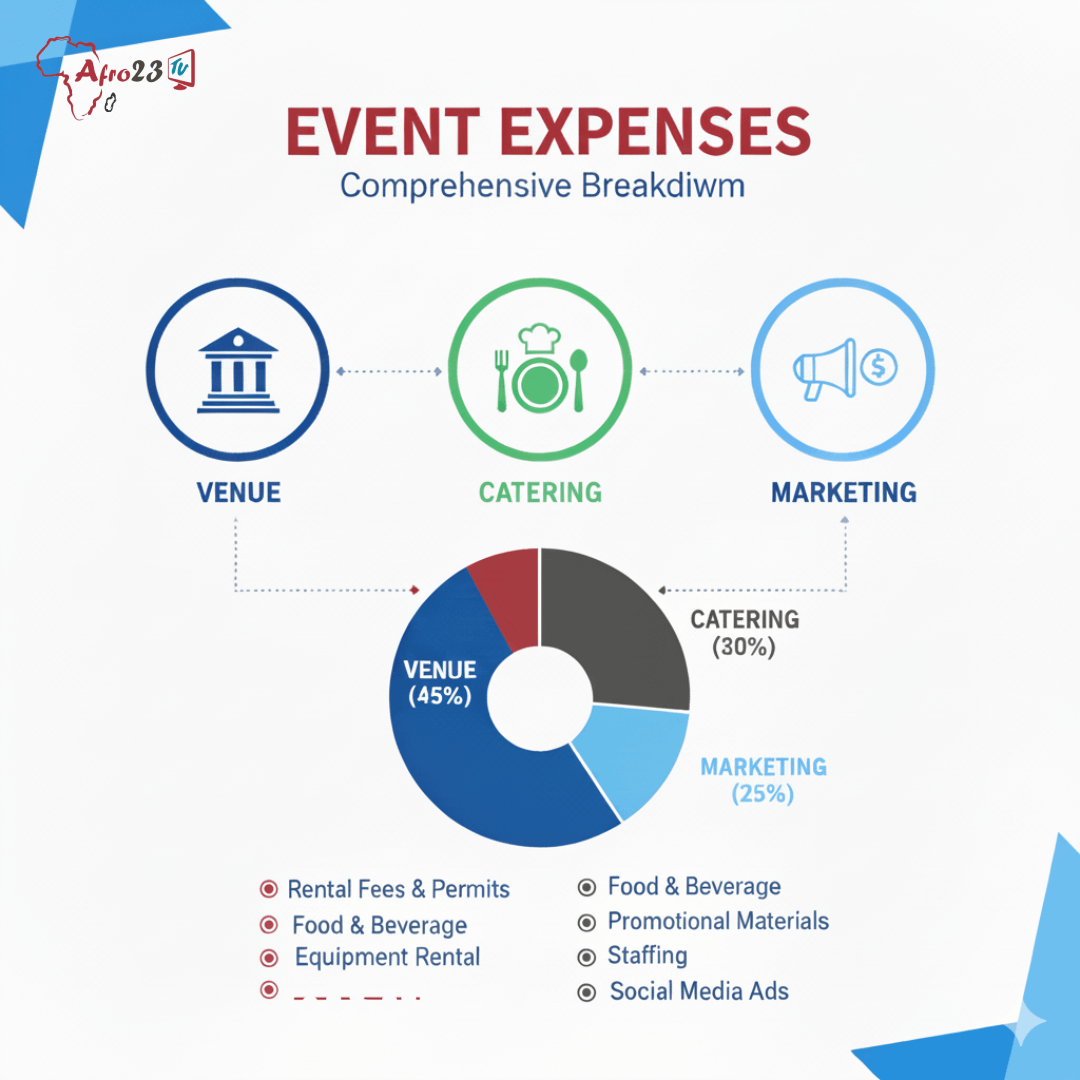
This has to do with breaking down all the costs associated with your event, including venue rental, catering, entertainment, event promotion, equipment, and staffing. Be realistic and thorough, to avoid surprise expenses later.
4. Estimate costs of event expenses
When estimating event costs, it’s important to do your homework. This means reaching out to vendors to get quotes on prices for things like catering, equipment rentals, and entertainment. Also, research venues to find out their fees and any extra charges.
Don’t forget to read reviews and look at the vendor’s past work to avoid spending money on poor quality or unreliable suppliers. This helps ensure you get good value for your money and prevents problems that could ruin your event.
5. Prioritize expenses
Rank costs by necessity. Focus on essentials (things that directly impact event success), then allocate lesser funds to nice-to-haves. This approach safeguards event success, because it makes it more flexible to cut non-essentials if funds tighten.

6. Create a contingency plan
Life happens, and unexpected expenses might pop up. A solid contingency plan means reserving about 5-10% of the total budget for emergencies or unforeseen costs, ensuring your event doesn’t derail when the unexpected happens.
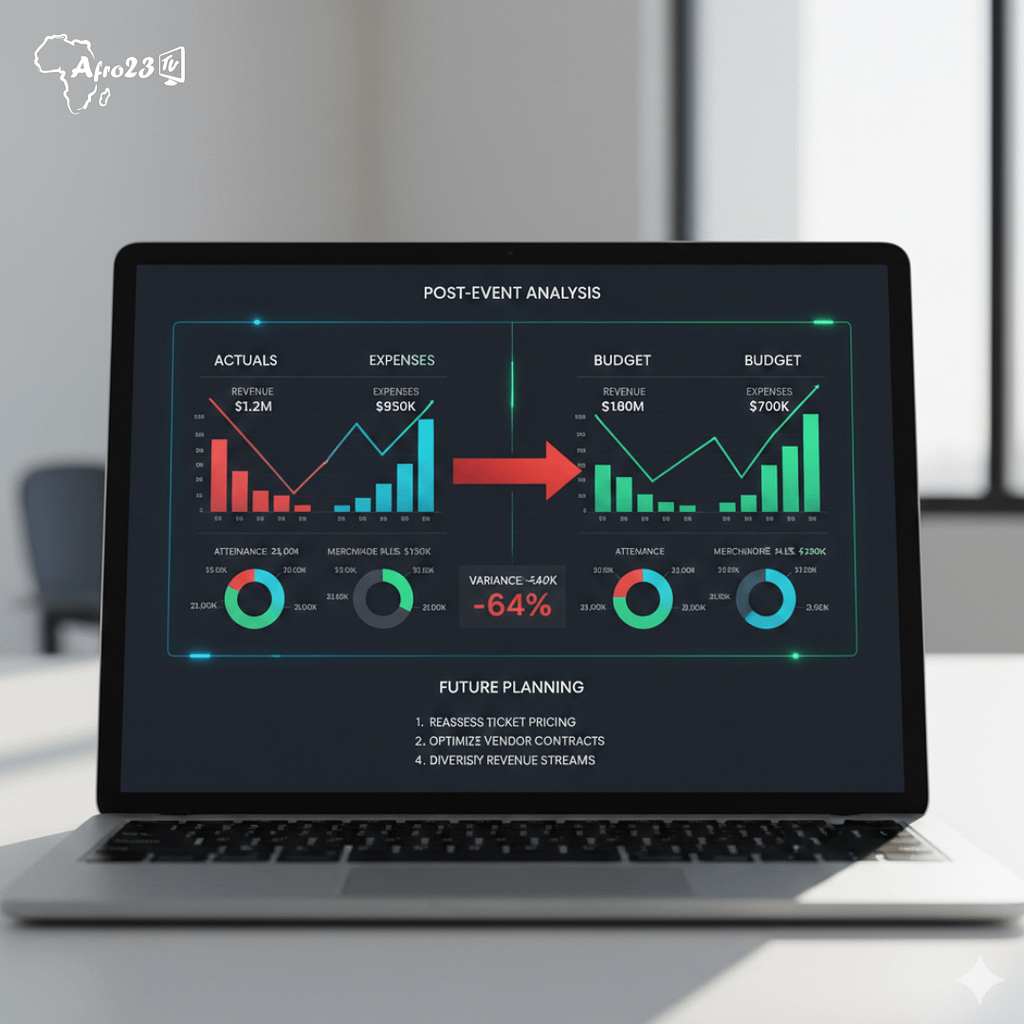
7. Post-Event Analysis
After the event, make sure you compare planned expenses to actual expenditures so as to learn and improve budgeting accuracy for future events.
A well-planned event budget is your most important tool for staying in control of costs and making smart spending decisions when it comes to your occasion. By carefully following the steps above, you set yourself up for a successful event.